
a global effort to create the foundation for
preventive
care

coordinated by
coordinated by
initiated by
initiated by
⸻ CHALLENGE / 01
A response to a global crisis
Chronic non-communicable diseases (NCDs) are the world's leading cause of death
— and its defining economic challenge.
>41M
Global NCD
deaths/year*
>18M
Premature deaths
(age under 70)*
75%
Deaths
due to NCDs*
>$47T
Estimated global economic
impact by 2030**
* World Health Organization (WHO), 2025
** World Economic Forum, 2023
⸻ APPROACH / 02
Your health
is not average
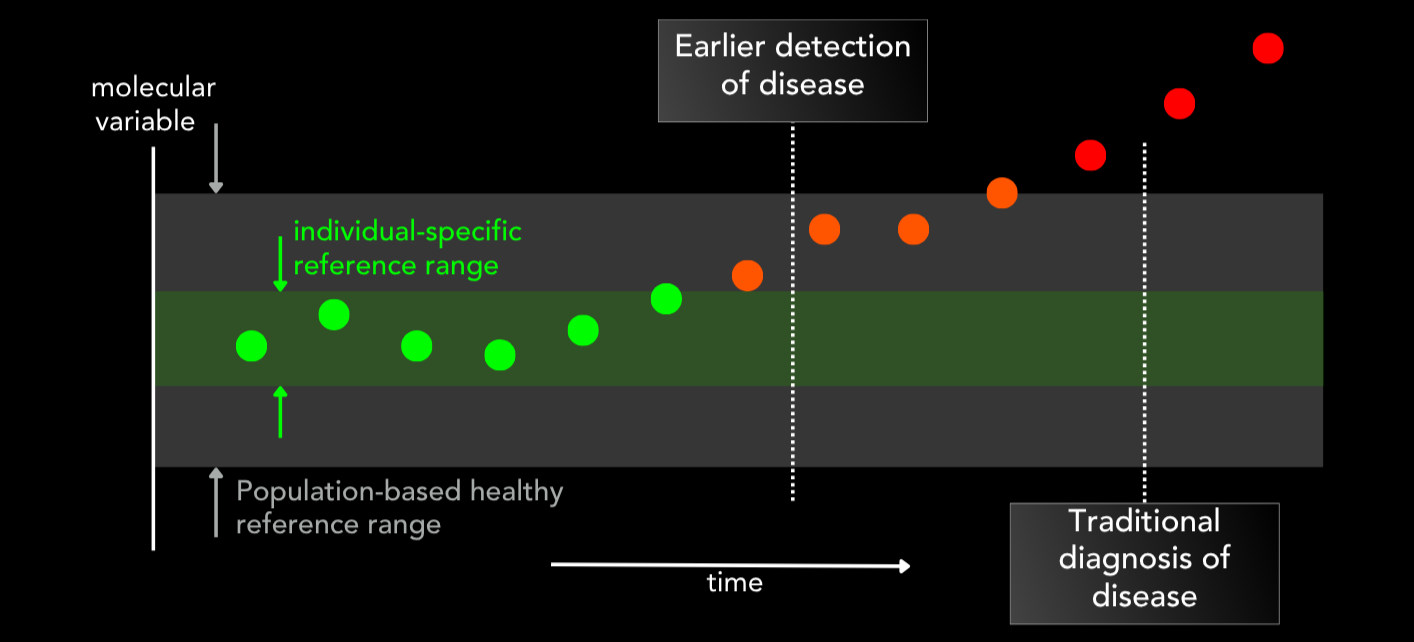
Most diagnostic tests compare you to a population range. protecting.health compares you to yourself — building a personal molecular baseline that reveals early deviations before symptoms emerge.
step 1
Follow people
over time
Repeated health data and blood samples create each person’s molecular baseline.
step 2
Molecular phenotyping
Advanced platforms measure signals that may shift before symptoms appear.
step 3
Build early
screening tools
AI helps identify patterns linked to the risk or onset of major chronic diseases.
⸻ FRAMEWORK / 03
A global collaboration
built on local clinical
excellence
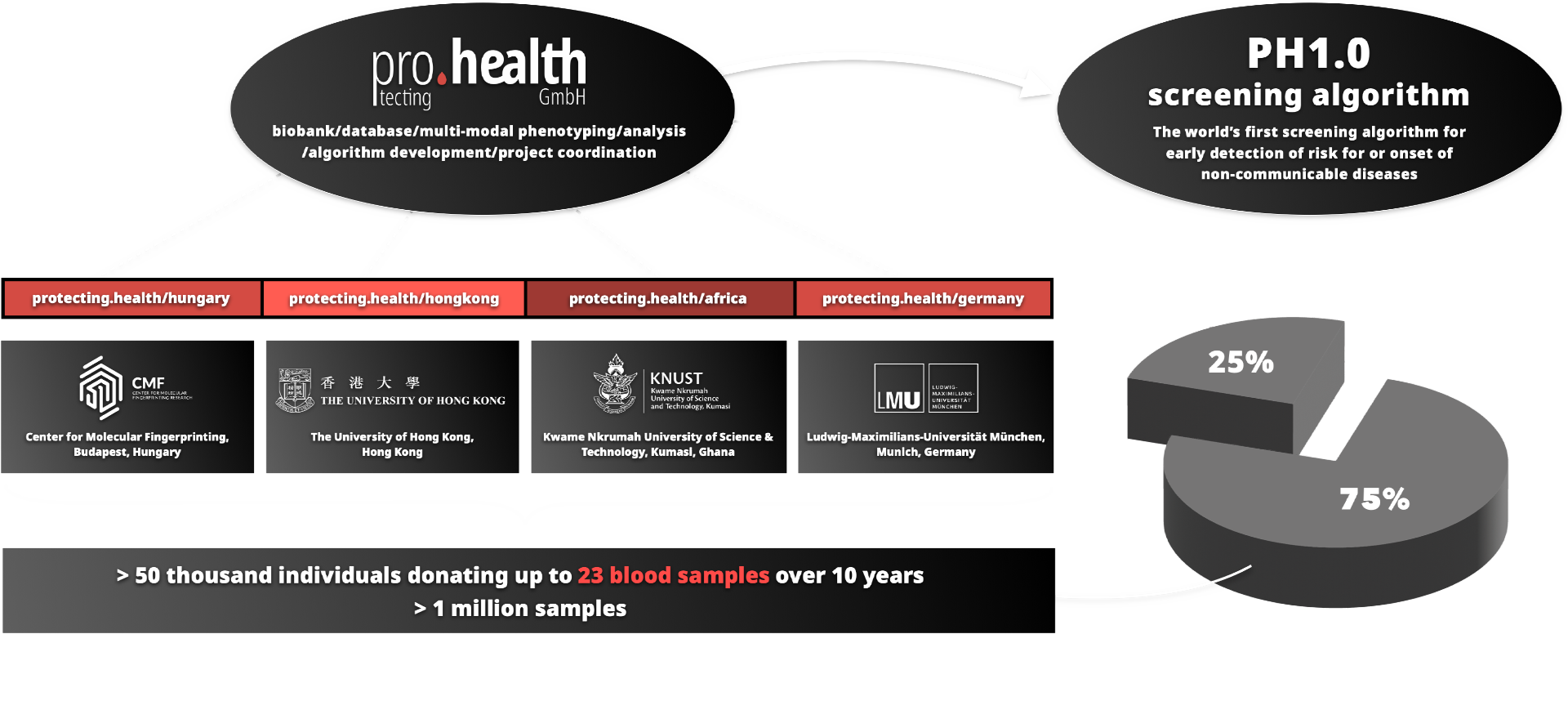
step 1
Local Clinical
Study Centers
Each partner establishes its
own center and clinical
cohort.
step 2
Central Molecular Phenotyping Center
Partners send samples and pseudonymized health data for standardized molecular phenotyping
↓
step 3
PH 1.0
Development
Integrated multi-partner data is used to build the PH1.0 health screening algorithm.
step 4
Shared Scientific & Commercial Value
Partners share the commercial value of PH1.0 and related outputs based on their contributions.
↓
↓
⸻ PROGRAMME OUTPUTS / 04
A biobank, a dataset &
an algorithm
Longitudinal biobank
500,000
Longitudinal blood samples over 10 years from 40K participants
Deep phenotyped data
4000+
Molecular variables measured longitudinally
Algorithm & IP
PH 1.0
A personalised health screening algorithm—designed for clinical use
⸻ GET INVOLVED / 05
Let’s develop
personalized
preventive medicine
together
For research institutions, clinical partners, and technology collaborators to join the initiative.
For sponsors and investors with passion for benefiting humankind.